From 2,400 to 9,800 monthly organic visitors — a Series-A SaaS rebuilt in 6 months
The founder had given up on SEO. Eighteen months, four articles a month, and a flat line in Google Search Console. Here's the audit that proved the bottleneck was never the content — and the 6-month plan that 4x'd their organic traffic, added ~$42K to MRR, and made their CMO a believer again.
A great product. Great content. A flat traffic line for 18 months.
Series-A HR tech startup
A B2B SaaS in the recruiting / applicant-tracking space serving mid-market companies across the US and UK. ~50 employees, $4M ARR, a strong product team, and a content marketing engine that had been publishing four high-quality articles per month for over a year.
On paper, everything was working. In Google Search Console, nothing was moving.
Stuck at 2,400 monthly visits for 18 months
Despite the content investment, organic traffic had completely plateaued. Competitors with weaker products were ranking on the high-intent commercial keywords: “applicant tracking system”, “recruiting software”, “HR automation”.
The CMO was about to redirect the entire SEO budget to paid acquisition. The founder had read too many "content is king" articles and felt lied to.
Six pain points compounding into an existential business problem
Beyond the flat chart, here's what was really happening on the inside — the conversations in the leadership Slack at 11pm, and the questions the board kept asking.
18 months of flat traffic
The line in Search Console had gone sideways since launch. No matter how good the content, the needle would not move. The team had stopped believing SEO worked for them.
Inferior competitors ranking on top
Sites with thinner content, weaker product, and uglier UX were sitting #1–3 on the keywords that drove the most demos. It was demoralising to the entire marketing team.
Content budget showing zero ROI
~$120K/year spent on writers, editors and SEO content briefs. CFO wanted to know exactly which of those articles had ever closed a deal. Nobody could answer.
Sales pipeline drying up
SDRs were running out of inbound, organic-warmed leads to call. Outbound was being asked to make up the difference — at 4× the cost-per-meeting.
Competitor moat invisible to them
The team kept asking "is it the content?" — without realising the top-5 competitors averaged 3.8× more referring domains. The gap wasn't on-page; it was off-page.
Founder considering a strategic pivot
Reallocate to paid search? Pivot to events? Cut the content team entirely? Every option on the table was painful, expensive, and would lose them another 6 months of compounding.
The audit told a completely different story than they expected
I ran a 4-day deep audit on the site, the content, the technical setup, and the backlink profile. Here's what the data actually said.
Backlink profile was 3.8× smaller than competitors
Top-5 ranking sites averaged 540 referring domains for the target keywords. The client had 142. Closing that gap was the entire job — not "more content".
Content quality was actually above competitors
I ran a content audit against the 3 top-ranking pages for each money keyword. The client's articles were longer, better-researched, and had more original data. Quality wasn't the problem.
82% of links pointed at the homepage, not money pages
Almost every existing link was pointed at the wrong URL. Authority was flowing to a page that wasn't trying to rank, while the commercial landing pages received almost none.
Anchor profile was 14% exact-match keyword — risky
Previous SEO had used "applicant tracking system" and "recruiting software" as anchor text far too aggressively. Google's algorithm tolerates 3–5% for a healthy site. This was a Penguin filter waiting to trigger.
The 6-month strategy: 50 editorial placements, anchor-discipline first
This wasn't a "blast and pray" link campaign. Every placement was modelled in a spreadsheet before outreach started.
Backlink gap audit
I pulled the top 5 ranking competitors for 14 commercial keywords, deduplicated their backlinks, and filtered to a list of 217 reachable publisher targets — niche HR/recruiting sites + general business publications.
Anchor & velocity plan
40% branded anchors, 30% generic (“read more”), 20% partial-keyword, 10% naked URLs. Velocity ramp: 6 → 8 → 10 → 12 → 12 → 12 placements per month, never spiking.
Page-level prioritisation
We picked 3 commercial landing pages (the money pages) and 2 high-intent comparison posts. Every link pointed to one of these 5 URLs — not the homepage, not the blog hub.
Mixed-tier deployment
70% DR 50–65 niche-relevant placements (volume), 25% DR 65–78 authority placements (trust transfer), 5% reserved for press-grade opportunities via HARO / Digital PR.
The 6-month execution timeline — no spikes, only compounding
Foundation & first 8 placements
Pitch templates written, outreach inbox warmed, first 8 guest posts placed across DR 45–65 sites in the HR niche. No ranking movement yet — but referring domains started climbing for the first time in 18 months.
Authority push
5 DR 65–78 placements secured, including 2 on well-known business publications. First measurable lift in GSC: impressions up 38%, average position improved by 4 places, two money pages crossed onto page 2.
Velocity scale
Sustained 12 placements / month with anchor discipline. Top-10 keywords grew from 18 → 47. Page-1 keyword count doubled. The compounding effect kicked in — organic traffic crossed 5,000/month.
Final push & report
Final 12 placements + 2 HARO wins on premium publications. Closed the engagement at 9,800/month organic — a 4.08× lift. Hand-off PDF delivered with all live URLs, DR + traffic stats, and the full anchor map.
Tools used to execute this campaign
No magic software. Just the right tools used with discipline.
What 6 months of disciplined off-page work actually produced
Two more deep-dive case studies
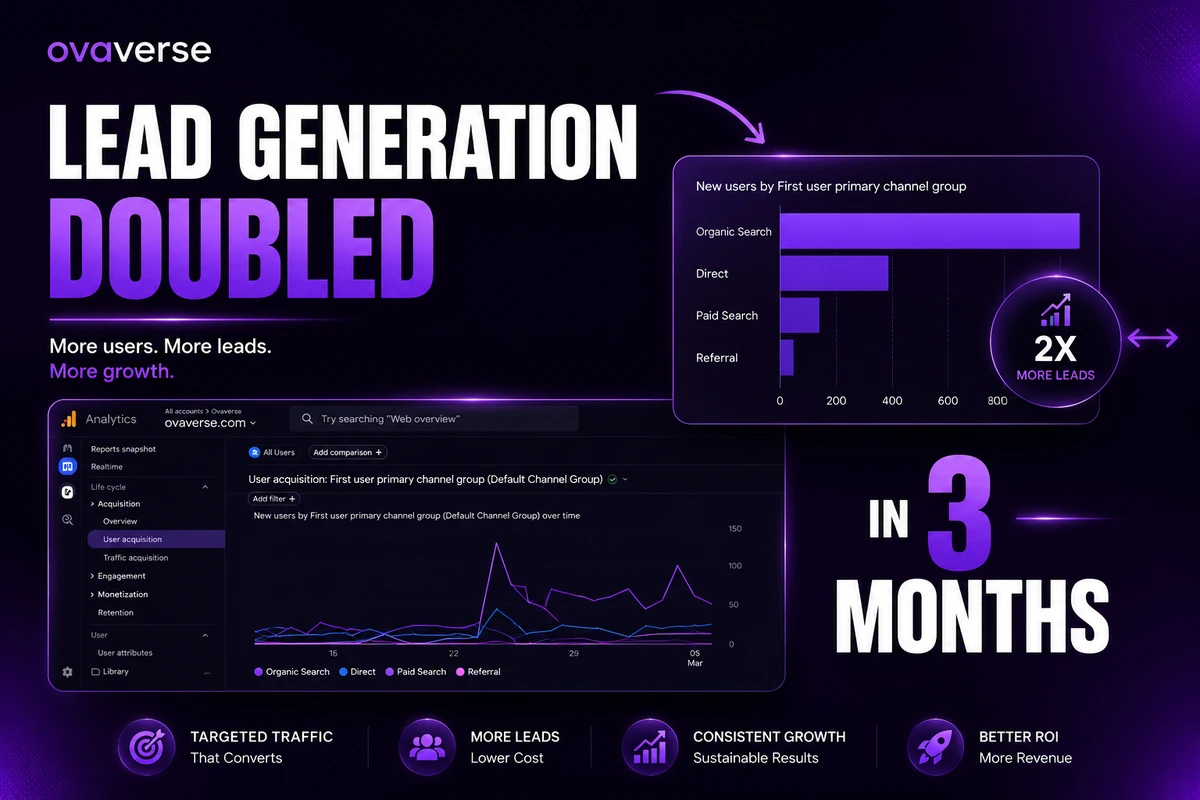
Map Pack #1 in 4 months
From page 3 to the top of the Map Pack — and a clinic that finally filled its empty chairs
Read full breakdown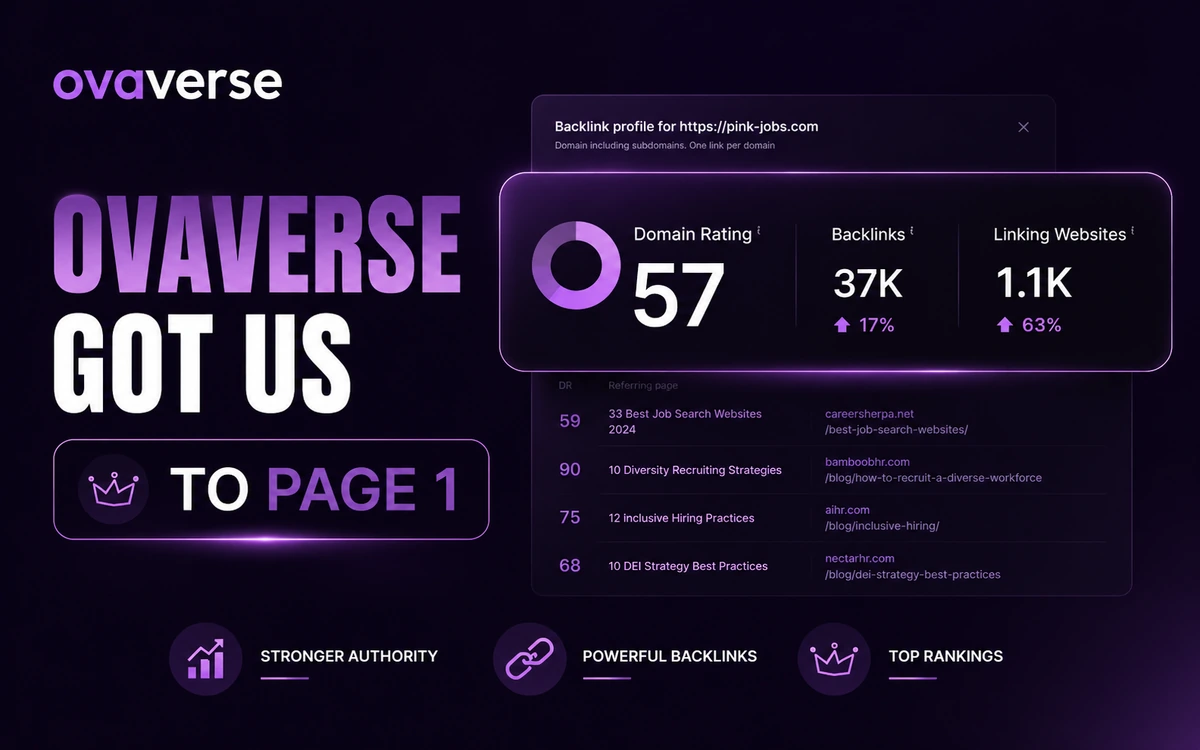
DR 19 → 57 in 12 months
How a content-rich but authority-starved blog became an unshakeable competitor moat
Read full breakdownHonestly, I'd given up on SEO. We were three weeks away from killing the content team and redirecting the budget to paid acquisition. Then Zohaib showed us the gap audit and proved — with screenshots — that this was a backlink problem, not a content problem. Six months later we're ranking #2 and #3 for keywords I never thought were realistic. Best SEO investment we've ever made.
Most SaaS founders blame content first. But if 5 comparable competitors out-link you 3–4×, no amount of better writing will fix the rankings gap. The bottleneck was never the content — it was the authority signal. Once we closed the referring-domain gap, the existing content started ranking on its own. Lesson: audit the gap before you commission another article.
Want a chart like this for your SaaS?
Tell me your niche, your top competitors, and your goal. Within 24 hours I'll send a tailored 90-day plan — with the exact placements, the anchor mix, the timeline, and the expected ranking shift. No fluff, no jargon.